
THE IMPORTANCE OF ULTRASOUND IN SWINE PRODUCTION AND RESEARCH.
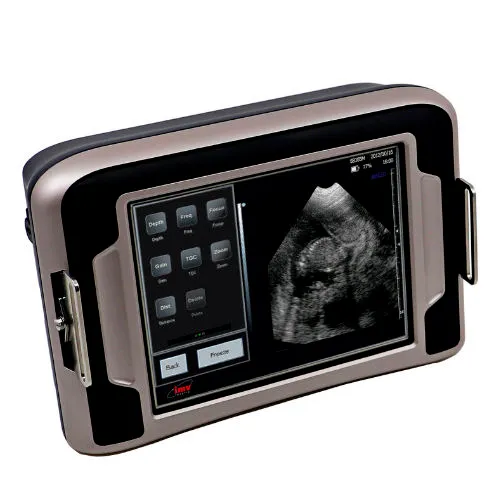
Ultrasound has become an indispensable tool in modern, technology-driven livestock production, going far beyond its traditional role in pregnancy confirmation. As farms increasingly adopt innovative tools, ultrasound stands out as a repeatable, non-invasive, and accurate method for monitoring key physiological parameters in pigs.  Whether for reproductive management, carcass evaluation, or research trials, this technology supports more informed decisions, improved animal care, and greater overall efficiency.

At Poulpharm, Zootests, and Vetspin, we apply ultrasound analysis in our trials to monitor body composition in fattening pigs as well as gestating and lactating sows. In addition, we offer hands-on training in ultrasound techniques and reproductive protocols, supporting our partners in bringing practical, research-based solutions into the field.

Using ultrasound to boost sows’ performance and longevity
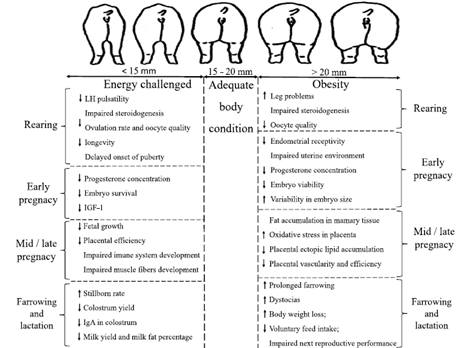
Monitoring sow body condition using ultrasound is essential in modern pig production to optimize reproductive performance, sow longevity, and piglet survival. Both overnutrition and undernutrition during any stage of the reproductive cycle can lead to metabolic disorders, reduced fertility, and increased perinatal mortality, negatively impacting both productivity and animal welfare (Figure 1).

Unlike single-point assessments, ultrasound allows for repeatable, precise, and dynamic monitoring of body composition at critical stages such as pre-insemination, mid-gestation, pre-farrowing, and weaning.

Maintaining backfat thickness within an optimal range—16–20 mm for sows and 15–19 mm for gilts—is crucial to prevent reproductive issues related to poor body condition. Obesity or underweight should be avoided in all phases of the sow reproductive cycle, as deviations of normal body condition in one phase can exert carry-over deleterious effects in subsequent reproductive phases that could lead to severe impairments in performance (Figure 1).


How can ultrasound be used?

Reproductive management

  • Early and reliable pregnancy diagnosis (from 18 – 20 days post-insemination)
  • Monitoring uterine health
  • Evaluating ovarian activity in gilts and sows

Body composition and carcass quality

  • Backfat thickness and loin depth measurements
  • Estimation of fat and protein body composition over time
  • Body weight has a low correlation (lower than 35%) with fat and lean tissue deposition, making it a poor predictor of carcass quality

Nutritional plan and feed additive research

  • Evaluation of energy partitioning and protein deposition
  • Track growth performance and body composition individually
  • Support precision feed strategies

Genetic selection and breeding programs

  • Improve accuracy of estimated breeding values with repeatable objective measurements
  • Measure heritable traits like backfat and loin eye depth for genetic selection

Do not hesitate to ask your questions, Poulpharm’s experts team are here to solve your problems!

post tags :
No tags to display. Try to select another taxonomy.

Leave A Comment

your ideal recruitment agency

view related content